Esher
Wolf HallEsher is the diminished refuge to which Thomas Wolsey’s household moves after the king’s agents begin inventorying the cardinal’s possessions. Once a residence Wolsey had left behind for Hampton Court Palace, it becomes a cold, under-equipped staging ground for his fall: Thomas Cromwell must improvise the means to keep Wolsey comfortable while the household confronts lost wealth, uncertain loyalties, and an unknown future.
Retreat after Wolsey’s fall
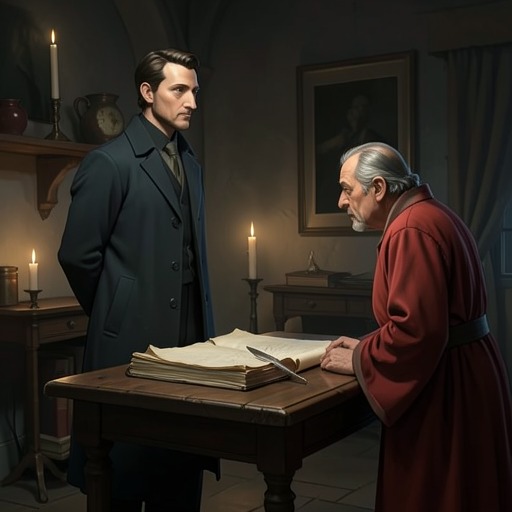
When rumours spread that Wolsey is to be sent to the Tower of London, he denies them and announces that the household is going to Esher instead. He tells Sir William Gascoigne to supervise the removal of his goods, insisting that everything received from the king must be returned in good order. The household has little time to prepare. George Cavendish points out that Esher is empty and asks where Wolsey will sleep, how they will provision the house, and how they will get there. The cardinal proposes going upriver by barge, with horses to meet them at Putney, and says they will borrow what they need.
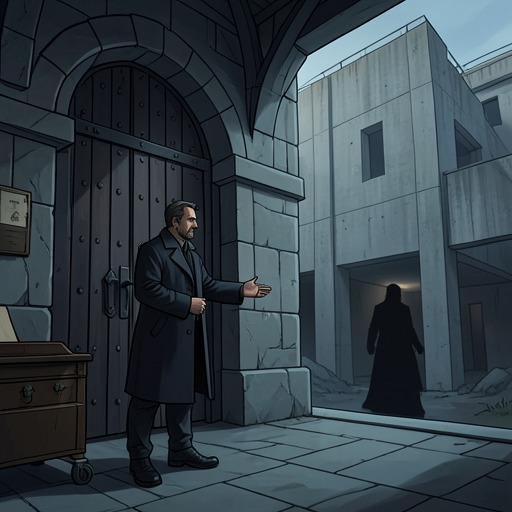
The arrival makes the retreat’s precariousness plain. Esher stands beneath the old keep of Bishop Wayneflete, with octagonal towers and a defensive wall, but its brickwork is decorative rather than truly fortifying. Wolsey has not used the house since building Hampton Court Palace. The rooms and stores have been neglected, and the appearance of a substantial residence cannot conceal how little it is ready to shelter a great household.
A house made habitable
Cromwell goes directly to the kitchens to see that Wolsey can eat and drink. Unlike the kitchens at Hampton Court, Esher’s have no running water; the larders are depleted, the supplies show signs of poor keeping and theft, weevils infest the flour, and mouse droppings lie where pastry should be rolled. It is nearly Martinmas, yet the beef has not been salted. The stockpot is mildewed, and the kitchen equipment is inadequate. Cromwell recruits boys by offering cash for scrubbing and cleaning, then dictates orders to a clerk while breaking eggs and testing the kitchen’s supplies. He asks for nutmeg and saffron, commodities the staff do not seem to know how to provide.
Getting Wolsey into a proper bed takes until late. Cromwell and Cavendish stay up to list the necessities: plate, bedsheets, table linen, and firewood. Cromwell plans to bring in Italian workers to reorganize the kitchens, expecting that the process will be difficult at first but functional after three weeks. The immediate food and shelter problems are only part of the task: several hundred members of Wolsey’s household have been retained at Westminster, while around three hundred are expected to follow him to Esher. With no ready cash for wages, the two men face the possibility of breaking up the household; Cromwell insists that its servants will not go unpaid.
Wolsey’s retreat and Cromwell’s loyalty
Esher becomes a place where service to Wolsey is tested through practical acts rather than ceremony. Cromwell promises to bring clerks from London and determine what assets remain, though the paperwork has been taken and creditors may hesitate to pay. He considers whether the French king, who owes Wolsey a pension, might send money in advance of a restoration to favour. At daybreak, he urges Cavendish to call in the many obligations Wolsey has earned from gentlemen across the realm. Financial uncertainty, diminished space, and the need to preserve the household all expose how much of Wolsey’s former power depended on the material apparatus of his service.
Cromwell also stays with the cardinal’s party as it settles into the house. In the winter of 1529–1530, he recalls sitting with Wolsey by a fire in a room with a smoking chimney, and orders the person responsible for the chimneys and hearths to address the problem. His attention to domestic conditions is inseparable from his political loyalty: at Esher, care for the household and protection of Wolsey’s position are parts of the same work.
Political uncertainty in domestic space
The men’s late-night conversation at Esher turns from cold, rats, and unpaid wages to the question of how Wolsey could have fallen so far. Cavendish asks how the cardinal came to be kneeling in the dirt. He wonders whether the king has been made to yield by Anne Boleyn, repeating the claim that she is a witch. Cromwell rejects the accusation as childish. The exchange shows how political explanations proliferate in a household suddenly deprived of certainty, while Esher’s discomfort gives those anxieties an immediate physical setting.
Esher is also a temporary vantage point from which Cromwell watches the struggle over access and advancement. He reflects that the Duke of Norfolk would not have allowed him a seat in Taunton without the king’s consent, and that Norfolk believes Wolsey has buried treasure and Cromwell knows its whereabouts. Cromwell returns to Esher and tells Wolsey he will not forsake him. Later, he speaks with Anne Boleyn about the money he has spent on the cardinal and the grants others received from Wolsey’s lands. These encounters place the diminished residence within a wider contest over patronage, information, and who will inherit influence from Wolsey’s fall.
The house also anchors Cromwell’s continuing political work. During debate over suspending annates paid to Rome, the king watches members of the Commons divide according to their support for the bill; the tactic exposes potential allies and opponents. Esher belongs to the same political landscape: a place of retreat, but not of withdrawal from the decisions reshaping the realm. Its neglected kitchens, cramped accommodation, and smoking chimney render the loss of Wolsey’s court tangible, while Cromwell’s labor there shows loyalty persisting as the cardinal’s security disappears.